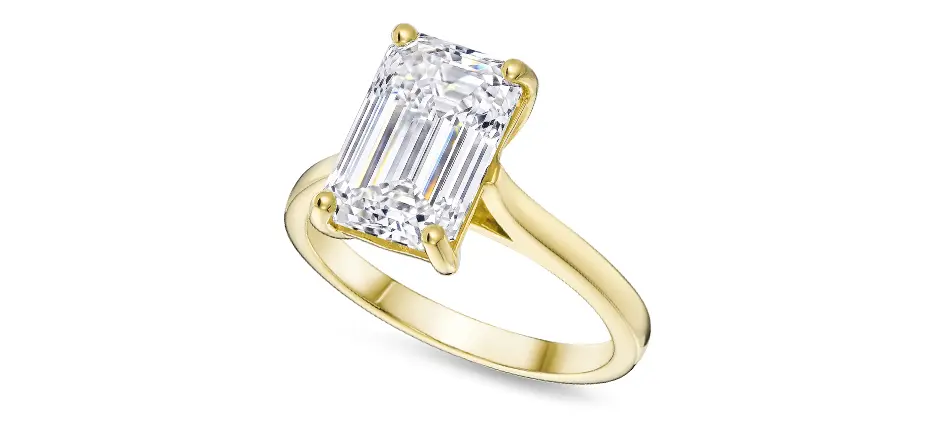
Jewellery Product Photography: Why It's the Hardest Thing to Photograph
What Is Jewellery Product Photography?
Jewellery product photography is the art of photographing rings, necklaces, earrings and other pieces specifically for e-commerce, marketplaces and catalogues, rather than for general lifestyle or editorial use. The brief is narrow but unforgiving: show the piece cleanly, accurately and consistently enough that a customer can buy it with confidence without ever holding it.
Most products are forgiving. A candle, a trainer, a bottle of gin will all look perfectly respectable with decent light and a steady hand. Jewellery will not.
The problem is scale. A ring photographed for a product page is often reproduced at many times life size, which means every fingerprint, every stray fibre and every slightly soft edge arrives on the customer's screen enlarged and obvious. Nothing hides.
That is why jewellery photography sits in its own category rather than being treated as a subset of general product photography.
Essential Equipment for Jewellery Product Photography
Before lighting or styling come into it, jewellery product photography demands a specific equipment setup that most general product shoots can skip:
- Macro lens and a camera body. A true macro lens on a DSLR or mirrorless camera is what resolves engraving, pavé settings and hallmarks at close range. A steady, high-resolution smartphone can manage a passable social image, but rarely a listing-ready one.
- A sturdy tripod. At macro distances even a slight hand tremor shows up as blur, and tripod mounting is also what makes focus stacking possible.
- A light box or light tent. Diffusing harsh reflections before they hit the piece is far easier than trying to remove them afterwards.
- Reflectors and small fill cards. Bouncing soft white light back into shadows keeps detail visible on the far side of a ring or pendant without needing another full light source.
A phone camera's aggressive in-camera sharpening and noise reduction tend to destroy the fine detail a macro lens preserves, which is usually the real gap between a nice photo and a photo that sells.
Lighting and Reflection Control: Why the Camera Is Rarely the Problem
Brands who are unhappy with their images almost always blame equipment first. It is usually the wrong diagnosis.
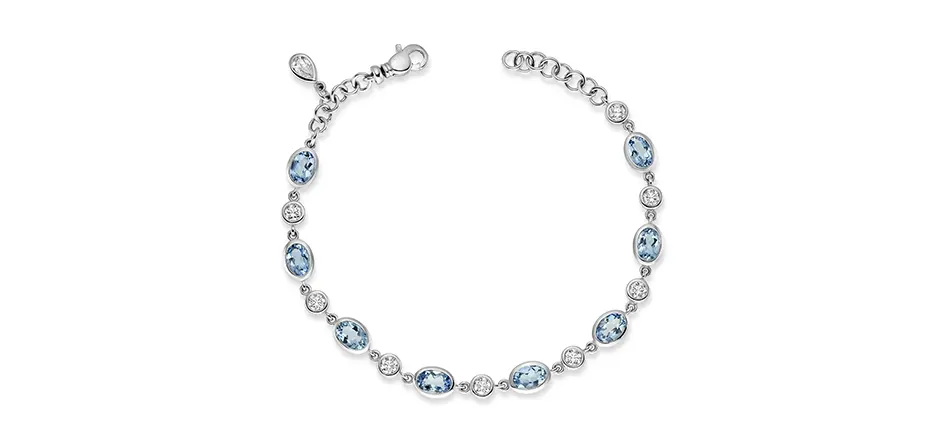
Polished metal does not really have a colour of its own; it shows you a distorted picture of whatever surrounds it. Point a camera at a highly polished bangle and you will photograph the room, the tripod and, if you are careless, the photographer. Getting it right is less about capturing the piece than about carefully building the environment it reflects.
Gemstones add a second layer of difficulty. They refract rather than reflect, behaving more like tiny lenses than solid objects, and they need light arriving from specific angles before they show any life at all.
- Avoid direct, on-camera flash. It creates blown-out hot spots on shiny metal and gemstones that are almost impossible to recover in editing.
- Work in a neutral environment. Coloured walls and clothing cast reflections onto polished metal just as easily as studio lights do.
- Fix your colour temperature. Setting adjustable lighting to a consistent point, typically in the 3000K–5500K range, keeps metal and stone colours true to life across an entire product range rather than drifting shot to shot.
Macro Is Not the Same Thing as Detail
Getting close is easy. Getting close while keeping the whole piece sharp is not.
At macro distances, depth of field collapses to a matter of millimetres. Focus on the centre stone and the shoulders of the ring go soft; focus on the band and the stone turns to mush. The fix is focus stacking, where a sequence of frames captured at incrementally different focus points is combined into one image that is sharp throughout.
It is slow, meticulous work, and it is the single biggest difference between images that look like a catalogue and images that look like a phone snap that has been over-sharpened.
Styling and Composition for E-Commerce Jewellery
Styling in jewellery product photography has one job: add just enough context without competing with the piece.
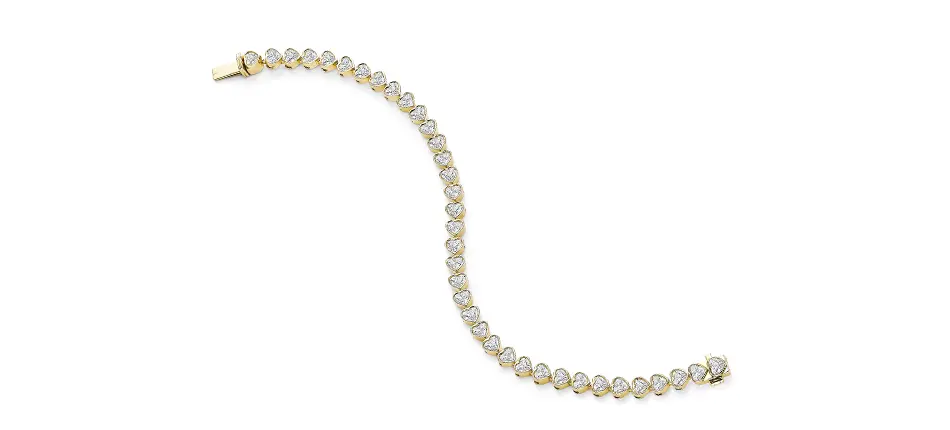
- Clean surfaces first. Fingerprints and dust are invisible to the naked eye but obvious once a ring is blown up on screen, so pieces are wiped down with a microfibre cloth immediately before every frame.
- Minimal, deliberate props. Trinket trays, linen, marble or a scattering of loose stones can add depth to a styled shot without pulling focus away from the product itself.
- A true white background for the reference shot. Marketplaces and most e-commerce platforms expect a clean, colour-accurate packshot as the primary image, with styled or lifestyle shots supporting it rather than replacing it.
Composition and styling are where creative product photography and straightforward e-commerce photography start to diverge, and a jewellery brand generally needs both rather than choosing one.
One Image per Product Is Costing You Sales
A jewellery customer is trying to answer three separate questions, and no single photograph answers all three.
- What is it? That is the clean packshot.
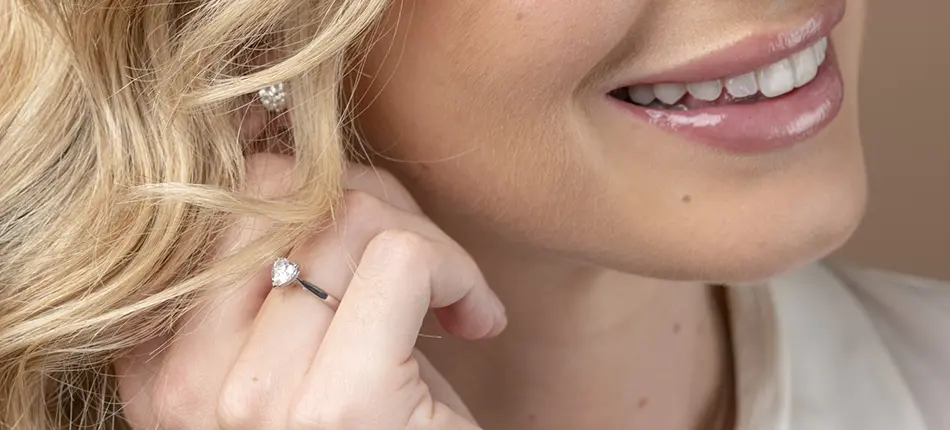
- How big is it, really? That needs a hand, a neck or a wrist for reference, which is where model photography earns its keep.
- What does it look like from the side, or from behind? That is where a 360 spin or a short product video does work that stills cannot.
Leave one of those questions unanswered and the customer does not email to ask. They close the tab.
Colour Accuracy Is a Returns Problem, Not an Aesthetic One
Yellow gold, rose gold and champagne finishes live very close together in tone. A modest colour cast from mixed lighting, or an edit made on an uncalibrated screen, is enough to shift one into another.
Customers do not notice this at the point of purchase. They notice it when the box is opened, and by then the cost is a return, a refund and a small dent in trust. Colour management is not a nicety on a jewellery shoot; it is the cheapest returns policy you will ever buy.
Creative Work Still Needs a Reference Image Behind It
None of this is an argument against ambition. Creative product photography is what gives a jewellery brand a personality and what makes a campaign memorable.
But the styled hero image sells the idea, while the honest, well-lit reference shot closes the sale. Brands that run one without the other tend to struggle, and how you balance the two should follow the design of your own site rather than a marketplace's rules, as we argued in your website, your rules.
Go Deeper: The Full Jewellery Product Photography Guide
Each of the techniques above has enough to it to earn its own deep-dive. These are written the way we'd brief a new studio hire — specific settings, specific tools, specific failure modes:
- Focus Stacking Jewellery Photography Without the Halos — aperture choice, frame counts, rail vs in-camera bracketing, and fixing the artifacts specific to faceted stones.
- Lighting Reflective Jewellery Without Losing the Metal or the Sparkle — light tent construction, negative fill, and why metal and gemstones need opposite lighting at once.
- Photographing Gold Jewellery So the Colour Is Actually Accurate — metamerism, white balance, colour calibration, and the returns data behind it.
- Building a Consistent Jewellery Catalogue for E-Commerce — shot lists, marketplace image specs, batch processing and QA at catalogue scale.
The Real Takeaway
Jewellery product photography is unforgiving because the subject is small, reflective and photographed close enough that nothing can be concealed.
That is not a reason to accept mediocre images. It is a reason to stop treating jewellery like every other product on the shelf.
MO Studios is a Birmingham-based product and jewellery photography studio, creating e-commerce images, 360 spins and product videos for jewellery, watch and luxury goods brands across the UK. You can see how this plays out across finished work in our jewellery photography portfolio, or get in touch to talk through a specific collection.
Frequently Asked Questions About Jewellery Product Photography
What is jewellery product photography?
Jewellery product photography is the practice of photographing rings, necklaces, earrings and other pieces specifically for e-commerce, catalogues and marketplaces, rather than for general lifestyle or editorial use. It demands specialised equipment and precise light control to manage tiny details, intense reflections and shallow focus, with a stable setup, soft diffusion and careful post-production needed to remove dust and blemishes before a listing goes live.
Why is jewellery harder to photograph than other products?
Jewellery is small, highly reflective and usually shot close up, so every flaw is magnified. Polished metal mirrors everything around it, including the camera and the photographer, and gemstones behave more like tiny lenses than solid objects. Techniques that work fine on a box or a bottle simply fall apart at this scale.
What equipment do you need for jewellery product photography?
A macro lens on a DSLR or mirrorless body, a sturdy tripod, and a light box or light tent to diffuse harsh reflections are the essentials. Reflector cards or small foam boards help bounce soft fill light into shadows, and stable, adjustable studio lighting set to a consistent colour temperature keeps metal and stone colours true to life across a whole product range.
How many images do I need per jewellery product for e-commerce?
Most jewellery listings need at least four: a clean packshot, a detail or macro shot, something that communicates scale such as a hand or neck shot, and one image showing the piece from an alternative angle. Listings with a fuller image set consistently outperform those built around a single hero shot.
Do I need a 360 spin for jewellery products?
Not for every piece, but they earn their place on higher value items. A 360 spin lets a customer inspect a ring shank, a clasp or a setting the way they would in a shop, which removes the uncertainty that stops people adding expensive items to a basket.
Why does my gold jewellery look the wrong colour online?
Usually because of mixed lighting or an uncalibrated edit. Yellow gold, rose gold and champagne finishes sit close together in tone, and a small colour cast is enough to make one read as another. Customers order what they see on screen, so colour drift shows up later as returns rather than complaints.
Can I photograph my own jewellery on a phone?
For a quick social post, yes. For a product page, rarely. Phone cameras apply heavy sharpening and noise reduction that destroys fine detail in engraving and pavé settings, and their tiny sensors struggle with the depth of field needed to hold a whole ring in focus.
Should jewellery be photographed on a model or on white?
Both, and for different jobs. The white packshot is the reference image that answers what the piece actually is. The model or lifestyle shot answers how it wears and how big it is. Brands that use only one of the two tend to lose sales at whichever question they left unanswered.
By M.O. Studios — Birmingham-based jewellery & product photography studio Updated 12 August, 2026